The crisis is not an emergency, it’s the real test for your company
by Matteo Tivegna
From emergency to strategic pre-occupation: how invisible work, team synchronization, and lucidity transform Crisis Management from a first-aid kit into a true test of leadership.
In the language of corporate communication, the word crisis is almost always associated with a specific image: a fire to put out to limit the damage. In a market obsessed with performance and the “blackest t-shirt”, a crisis is often experienced as a failure to hide. This reactive approach is profoundly misleading, because crises don’t arise suddenly; they emerge when a latent tension meets an unprepared context.
At that moment, it’s not the extemporaneous speed of response that makes the difference, but the quality of the preparation.
The moment of truth: Strategic Crisis Management as an authenticity test
There is a widespread belief among corporate boards: a crisis is a failure to be hidden, a deviation from the brand’s positive narrative. Yet, when media attention focuses on a company, communication ceases to be a narrative construct and becomes a test of authenticity. Any room for ambiguity vanishes, and this is the moment of maximum alignment between what a brand claims to be and what it actually demonstrates itself to be. In this sense, a crisis managed with awareness is not an opportunistic opportunity, but the means by which the solidity of what has been built beforehand becomes evident.
In Italy, crisis management is often approached as an emergency function, trying to adapt generic tools to specific contexts only after the damage has occurred. At Spencer & Lewis, we believe that the speed of the first public response — often required within an hour to avoid silence being read as a lack of control — is only the surface. What makes a response truly effective is the invisible work that precedes it. The most decisive element is the synchronization of people. A team must build a deep preventive “attunement” on values and on the client’s decision-making context before the emergency. Defining a clear crisis committee means knowing in advance who decides, who validates, who communicates, avoiding every step becoming an exhausting negotiation.
The value of being calm in times of crisis
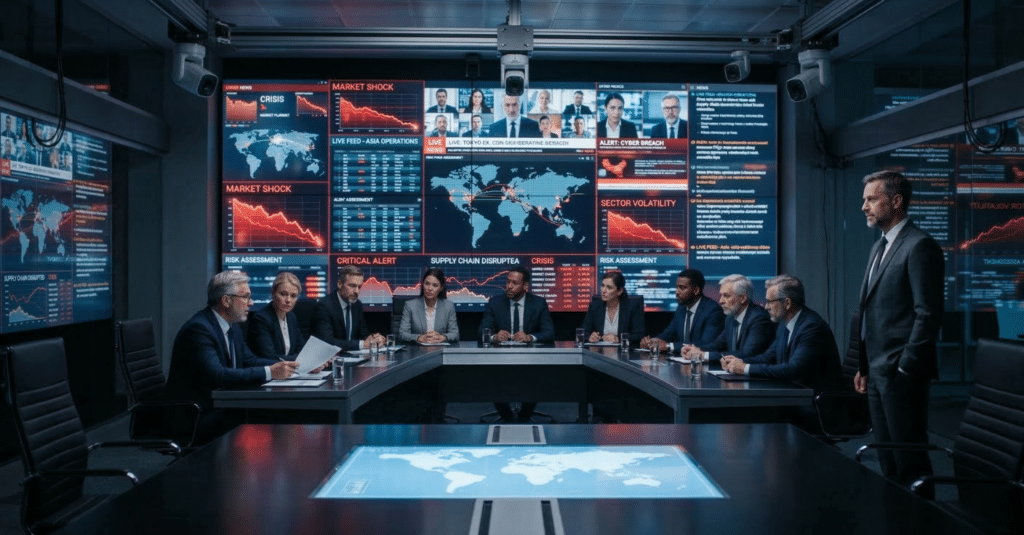
Those who have never experienced a crisis imagine management as a frantic sequence of decisions, but the most precious quality in those moments is only one: calm. Management and the internal team experience the situation with a very high level of emotional involvement and stress. In this context, the role of the external consultant becomes fundamental precisely because it offers a different perspective, helping the leadership regain lucidity. In complex scenarios like those managed with Costa Crociere, where attention becomes global in a few hours, the difference does not lie in the frenzy of actions, but in maintaining a clear line: what to say, what not to say, and above all, why. Sometimes the greatest support is reminding the client to breathe, slow down, observe the full picture before reacting.
Companies must stop limiting themselves to reactive defense and start developing a true strategic pre-occupation, anticipating sensitive issues and monitoring weak signals to build fact-based narratives. A common mistake is, in fact, considering the crisis as an isolated event, when in reality many critical or social issues tend to recur over time, revealing themselves to be deeply cyclical. When a company develops true governance, it stops limiting itself to reactive defense and moves to a strategic pre-occupation. This means anticipating sensitive topics, monitoring weak signals, and building in advance a narrative based on data and facts, transforming vulnerabilities into opportunities for clarification.
From AI to leadership: a human responsibility
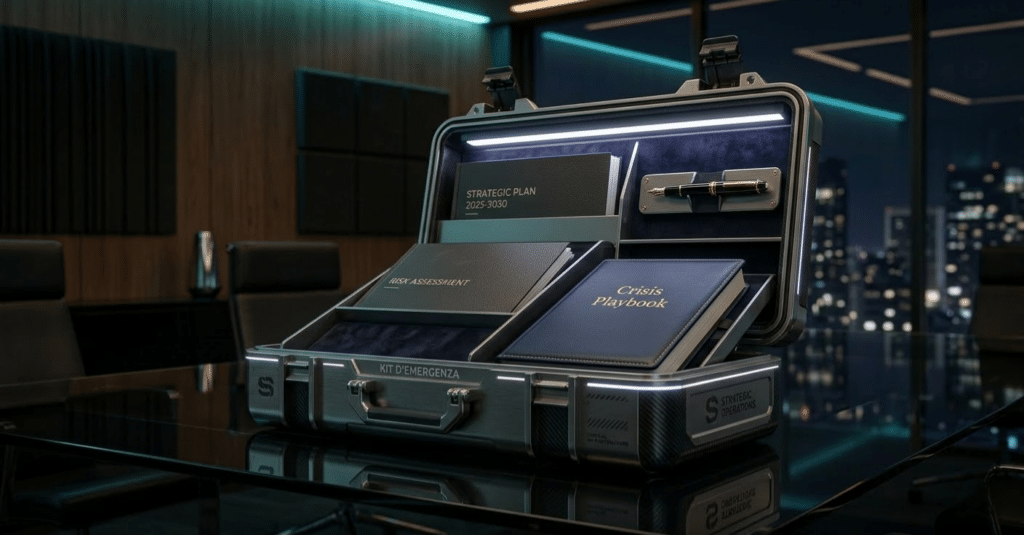
In the coming years, Artificial Intelligence will play an essential role in the early detection phase and in the simulation of risk scenarios. However, the risk is thinking that technology can replace human judgment. Machines recognize patterns, but they do not possess empathy or cultural context. The responsibility for evaluating reputational implications will inevitably remain human. In the end, crisis management is not a technical discipline, but a form of leadership. When the unexpected arrives, companies do not need someone who “does more”, but a partner who helps them decide better.