The Era of AI Slop: why human creativity has become the true luxury asset

AI slop


Beyond “Digital Junk Food”: How Governance Transforms Artificial Intelligence from a Noise Generator into a Strategic Value Lever against AI Slop.


It is not a technological crisis. It is a crisis of relevance.

At Spencer & Lewis, we have been saying it for a long time: we are humans governing Artificial Intelligence. Today, however, that statement is no longer enough. If yesterday’s theme was access to technology, today the true differentiator is the strategic use made of it.

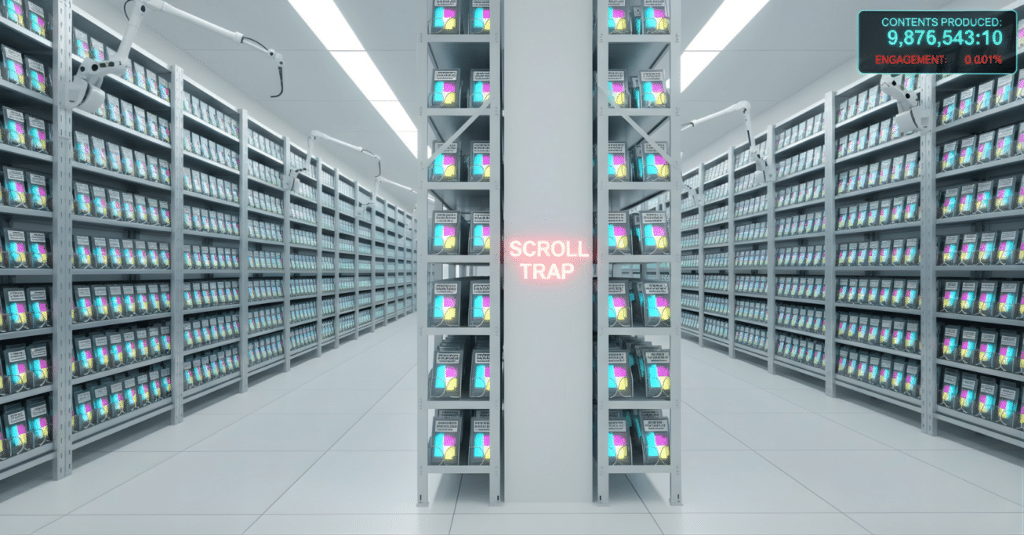
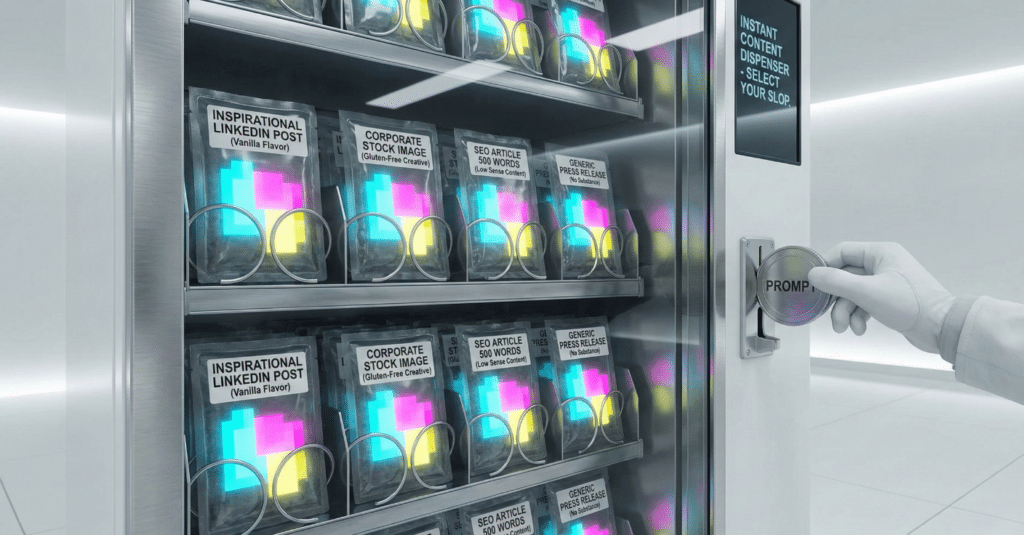
We have entered the era of AI Slop: an overproduction of synthetic content, formally flawless but strategically irrelevant, that is saturating feeds and eroding the perceived value of communication.

junk food

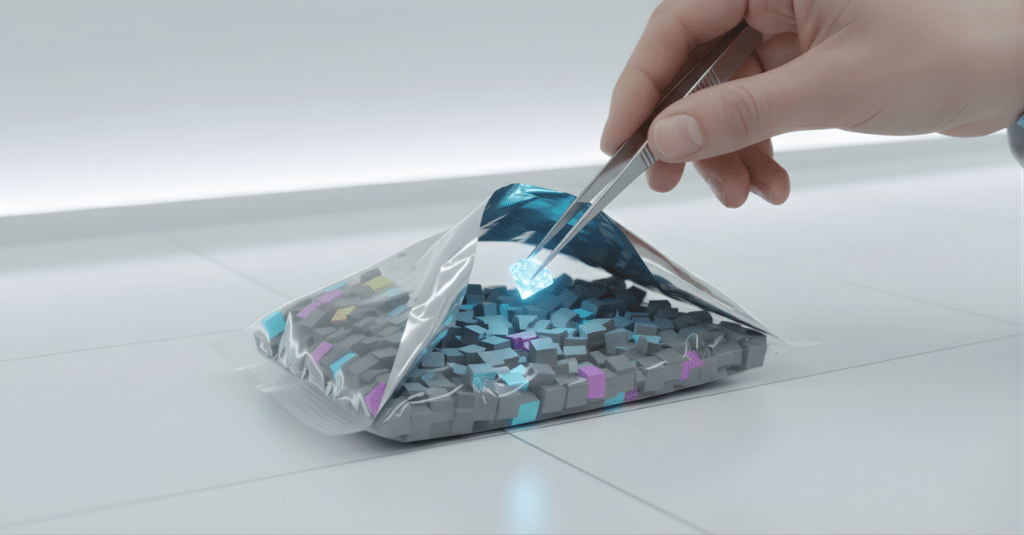
Like junk food, “Slop” is not immediately toxic. It becomes so over time: it anesthetizes attention, reduces trust, and erodes brand reputation. The point is not that AI produces mediocre content; the point is that it produces it too well, too fast, and at near-zero cost, making it impossible to distinguish between what deserves attention and what does not.

For a brand, using AI simply to “fill the calendar” is no longer an operational optimization. It is a strategic choice with business consequences.


When the cost drops to zero, value is also at risk

In a market where the cost of content production tends toward zero, communication is entering a new phase: the commodity trap.

Artificial Intelligence, by its nature, works on averages. It replicates existing patterns, recycled aesthetics, and pre-approved languages. The result is communication that is perfect, polished, optimized… and utterly powerless against the scroll.

Here lies the paradox: when everything is content, nothing is significant.

Continuing to produce messages just because “you can” does not build value; it dilutes it.

This is the true risk of AI Slop: the more you communicate, the less you are heard. In the long run, this has a direct impact on brand equity, pricing power, and credibility.


The real asset today is not output. It is context.

At Spencer & Lewis, we believe value no longer resides in the simple capacity to produce, but in the expertise required to define the correct context in which a message should, or should not, exist.

AI can generate a form, but it lacks the sensitivity to decide why a message should be launched today or which specific business challenge it must solve. It cannot evaluate reputational risks or, even more importantly, understand when the most strategic choice is to remain silent.

Without human guidance, Artificial Intelligence remains an orchestra without a conductor: it produces sound, but not music. This is the space where the difference is made between those who use AI as a mere noise multiplier and those who transform it into a strategic value accelerator.


Strategic Governance: The antidote to Slop

Taking a stand against Slop means aligning with CEOs and CMOs who share the same problem: distinguishing what generates value from what merely consumes attention. Our methodological vision starts with a clear choice: technology must be governed, not followed.

We do not simply ask AI what to communicate; we use it to empower a strategic vision defined upstream. This approach radically shifts the role of the agency from a mere technical executor to a strategic partner capable of deciding when to communicate, when to stop, and when to change course.

In this model, human time is not used to produce massive volumes, but to make better decisions that make the brand’s final value defensible in the market.


Authenticity is not an ethical value. It is a competitive advantage.

In an ecosystem saturated with synthetic content, authenticity is no longer a matter of style. It has become a luxury asset.

Being strategists who govern AI means taking on a responsibility: every message must have a reason to exist, not just a format to occupy.

Human creativity has not been replaced; it has been elevated. It is no longer needed to produce; it is needed to decide what is truly worth saying.

At Spencer & Lewis, we don’t create content to fill space. We create strategic directions that transform communication from an operating cost into a lever of lasting value.

Because in the era of AI Slop, the true luxury is not saying more. It is knowing when, why, and for whom to speak.

Magnesio Supremo Potassio+: Spencer & Lewis signs PR strategy for the launch of a new product from Natural Point (Gruppo Recordati).

Magnesio Supremo Potassio+: Spencer & Lewis signs the PR strategy for the launch of the new product from Natural Point (Recordati Group).

Over 400 appearances in print, TV, and digital channels, thanks to the Integrated PR Strategy by Spencer & Lewis supporting the consumer and trade launch of the new Magnesio Supremo, distributed by Natural Point (Recordati Group)

Spencer & Lewis, independent communication group associated with UNA – Aziende della Comunicazione Unite, has won, after a competition, the management of the PR strategy and media relations for the consumer and trade launch of Magnesio Supremo Potassio+, the new reference of the historic line Magnesio Supremo, distributed by Natural Point (part of the Recordati Group since 2019) at the beginning of the summer season. This choice demonstrates the effectiveness of the proposed PR strategy.

The omnichannel PR strategy developed pursued a dual objective: on the one hand, building awareness among the general public, and on the other, strengthening the scientific authority of the brand in dialogue with healthcare professionals. The PR direction guaranteed narrative coherence and a distinctive positioning, ensuring transversal visibility on consumer, lifestyle, health, and trade media. The implementation of the PR strategy proved crucial.

In this project, we chose to act as a strategic partner in building a coherent, credible, and distinctive narrative — said Massimo Romano, CEO of Spencer & LewisIn a sector like supplements, where authority, competence, and transparency are decisive levers, supporting Natural Point in defining and activating an integrated communication project represents for us a concrete example of high-value consulting. The level of trust built over time has made the integrated and omnichannel approach, the result of a new approach towards which Spencer & Lewis is moving, with evident results.

In addition to managing media relations, coordinating press presence, and media amplification activities — including in-depth analysis and dedicated content — Spencer & Lewis curated the conception and organization of the launch event, held in Milan, with the participation of the ambassador Martina Colombari, the nutritionist Serena Missori, and some spokespersons from the Recordati Group. The success of the event is a direct result of the implemented PR strategy.

The entire activity led to the generation of over 400 appearances in print, TV, and digital channels, confirming the effectiveness of an integrated and strategic communication, capable of enhancing the product within a market increasingly attentive to competence, transparency, and language. This result underlines the added value provided by the PR strategy.”

Spencer & Lewis, CEPAR and handfactory together in managing LEC’s international communications

Spencer & Lewis nella gestione della comunicazione Globale di LEC

Spencer & Lewis expands its presence in the international market by joining handfactory e Cepar for support in the LEC’s global communication management, the reduced-calorie ice cream brand founded by Charles Leclerc, a Formula 1 driver working for Scuderia Ferrari, from his manager Nicolas Todt and by ice cream entrepreneurs Federico Grom e Guido Martinetti.

A new concept that promises to broaden consumer choice and aspires to redefine industry standards with a product that is low in fat, high in fiber and a source of protein.

To each of the three member companies of UNA – United Communication Companies a key role in defining and executing the overall strategy: handfactory is currently responsible for art direction and digital content for the brand; Cepar co-created the digital strategy and implements the execution of LEC’s digital communication mix since its launch, coordinating the project and handling media planning with a focus on performance. A Spencer & Lewis the role of global partner to govern PR activities in line with the brand’s international strategy. It will be this synergy that will ensure a Integrated and cohesive communication across all target geographies..

The joint goal of this valuable collaboration is to ensure effective and impactful communication in the international market through a synergistic approach that can enhance the specific skills of each agency, to ensure global consistency and overview in all the activities that will take place in the countries of reference: Italy, France, the United Kingdom and Switzerland.” comments Diego Pacifici, Chief Marketing Officer of LEC.

The support of Spencer & Lewis will be mainly strategic: on Italian, British and Swiss soil, the independent communications group will count on the support of local entities to manage the press office and the coordination of KOLs and influencers, while on French soil it will play an advisory role alongside the local partner through a dedicated steering committee.

Visit Langhe Monferrato Roero – The Home of BuonVivere: new episodes for the podcast on Loquis that has reached 100,000 listens

Visit Langhe Monferrato Roero. podcast on Loquis

30 new stories, including children’s content, to narrate the beauty and culture of the UNESCO World Heritage territory

The journey through the hills of Langhe Monferrato Roero continues with new and captivating stories. The podcast on Loquis Visit Langhe Monferrato Roero – The Home of BuonVivere is now enriched with 30 new episodes, expanding the storytelling of one of the most fascinating areas of Italy.

The project, promoted by Ente Turismo Langhe Monferrato Roero in collaboration with Loquis, the world’s first platform for geolocated travel podcasts – and supported by Fondazione CRC – has reached 100,000 listens, confirming itself as a particularly effective initiative to enhance the territory through the authentic stories of its protagonists.

“Conveying the story of Langhe Monferrato Roero through different media languages is one of the tasks of our tourism promotion agency. The proper narration comes through the characters and the stories that have left their mark among the villages, castles, and roads of these hills,” said Bruno Bertero, Director of Ente Turismo Langhe Monferrato Roero. “We are pleased to provide our visitors with a valuable tool featuring high-quality content, able to accompany even the journeys of children, thanks to the podcasts created in collaboration with the Associazione per il patrimonio dei paesaggi vitivinicoli di Langhe-Roero e Monferrato.”

The voice behind these new stories is Andrea Mazzoleni, creator, author of the renowned podcast 51 litri, and voice of the Loquis Factory, the creative hub bringing together the best professionals in travel storytelling. His new work guides listeners through villages, trails, castles, and vineyards, with stories about culture, nature, traditions, and flavors.

Thanks to the podcast on Loquis, tourists can enjoy an immersive experience and discover the area directly along the routes or from home.

Among the new additions are stories dedicated to panoramic and cultural itineraries such as the Bar to Bar, the Grande Traversata delle Langhe, the Roero Bike Tour, and the most iconic viewpoints of the area, from La Morra to Diano d’Alba. Special focus is given to symbolic local products such as Barolo, Barbaresco, and Barbera di Nizza, as well as historical architecture, castles, and the figures who have shaped this land. Dedicated content for younger audiences is also included, with 6 children’s episodes telling magical and accessible stories linked to special places such as the Castello di Grinzane Cavour, the Langa del Barolo, and the infernot of Monferrato.

“Visit LMR represents one of the most significant examples of how strategic it can be, for a DMO, to integrate podcasts into the destination’s communication plan,” said Cristian Iovino, Commercial Director of Loquis. “We have reached the third production, despite the internal handover – from Flavia Fagotto to Bruno Bertero – showing a consistent and continuous vision. Each year, in fact, the organization has chosen to highlight an identity theme of the territory, combining audio storytelling with other promotional actions, without ever losing the value of previous initiatives. On the contrary, the consistent and renewed presence on our platform has fostered organic growth in listens, also confirmed by the positive feedback from tourists who continue to listen once they arrive at their destination.”

Launched in 2021, the Visit Langhe Monferrato Roero – The Home of BuonVivere channel currently features 179 episodes, available in both Italian and English, which can be listened to while traveling thanks to the geolocation function or from home.
The main topics include contemporary and traditional art, literary and wine culture, music, archaeology, sciences, and local knowledge. A collective narrative that combines the curious tourist’s perspective with that of the passionate resident, highlighting figures such as Paolo Conte, Beppe Fenoglio, Cesare Pavese, David Tremlett, Valerio Berruti, as well as companies like Ferrero and Ceretto. Alongside them, fictional characters like Tersilla the whale from the Museo Paleontologico di Asti help make the podcast a surprising audio archive suitable for everyone.

Travel podcasting continues to establish itself as one of the most effective and accessible tools for exploring and narrating territories, combining storytelling, direct experience, and on-the-go enjoyment.

Visit Langhe Monferrato Roero – The Home of BuonVivere is available both on desktop and via the Loquis app, free to download from all stores.

For further information: Spencer & Lewis for Loquis.

Italian box manufacturers between challenges and opportunities for the future

Gli scatolifici italiani tra sfide e opportunità per il futuro

On the occasion of Print4All, the leading event for professionals in printing and converting – scheduled at Fiera Milano from May 27 to 30, 2025 – Associazione Italiana Scatolifici presented the results of its most recent internal survey, offering an in-depth analysis of the sector’s health and its future prospects.

The survey was the focus of the talk “Italian box manufacturers in 2024: challenges and opportunities for the future”, held on Tuesday, May 28 at 3:00 PM, featuring the participation of Andrea Mecarozzi, President of Associazione Italiana Scatolifici, and Vice President Giorgio Bramezza.

The event represented a key moment of discussion to reflect on the performance of a sector that experienced a complex 2024, marked by a decline in revenue, but that looks to 2025 with expectations of stability and growth, with a focus on sustainability and collaboration between companies.

Economic data

The analysis highlights a sector withstanding economic difficulties and market changes. 64.7% of box manufacturers reported a decrease in revenue in 2024 compared to 2023. 13.7% recorded stability, while 21.6% reported growth over the previous year.

Looking to 2025, the outlook is cautiously optimistic: 37.3% expect growth, 35.3% forecast stability, while 27.4% anticipate a decline in revenue compared to 2024.

The survey also provided a snapshot of the size of Italian converting box manufacturers, showing strong balance among small, medium, medium-large and large companies. 28% of companies report a turnover of up to €3 million; 28% between €3 and €6 million; 17% between €6 and €10.5 million; and 27% over €10.5 million.

The trend in corrugated board purchases reflects the revenue trend: about 50% of companies reduced the square meters of board processed in 2024, 11.8% recorded stability, and about 40% reported an increase. For 2025, 35.3% of manufacturers expect purchase volumes to remain stable, while 29.4% anticipate growth of up to 5%.

Production and business management

From a production perspective, 2024 confirmed the Casemaker/Slotter – Rotary Die Cutter as the machine with the greatest impact on turnover, with 88.2% of companies identifying it as the most relevant. The American box therefore remains highly important in production; a product that has evolved in line with market demands: from the simple “brown box” to a tool for marketing and communication, also thanks to advances in printing technologies on corrugated board.

In terms of target industries, the leading sector for box manufacturers in 2024 was food (which, combined with beverages, accounts for nearly 60%), followed by furniture/plumbing & HVAC and automotive/mechanical.

The main business challenges for 2025, according to manufacturers, will be: finding qualified personnel and managing human resources; price competition from large integrated groups and non-integrated manufacturers; the increase in costs and the difficulty in passing on raw material price increases.

Trends and opportunities

In terms of market directions and new client demands, the survey revealed a significant increase in demand for board certified by forest chain-of-custody schemes (FSC, PEFC) and for compositions with a higher percentage of recycled material. This confirms the sector’s continued progress towards new goals of sustainability and circularity.

As for opportunities, box manufacturers are increasingly interested in replacing other packaging materials with paper and board. Currently, 47.1% of respondents have already seized opportunities related to replacing plastic packaging, paving a path likely to be strengthened by the many changes set to be introduced over the next three years by the Packaging and Packaging Waste Regulation (PPWR). Also in terms of opportunity, the creation of synergies among converting box manufacturers is seen as crucial to approaching the market with greater solidity and competitiveness.

“The data confirm that the box manufacturing sector is constantly evolving and facing increasingly complex challenges. Despite the difficulties, companies have demonstrated remarkable adaptability, with a strong focus on sustainability and innovation. I believe the signs of optimism emerging from the survey are an important indicator of the strength of small and medium-sized entrepreneurs, who face each day with positivity and hope for the future,” said Andrea Mecarozzi, President of Associazione Italiana Scatolifici.
“I’m also pleased to see that our companies recognise networking and synergy between box manufacturers as a strategic asset. I believe this is also the result of the work carried out over the years by our association, which has brought the sector together and will continue to be the platform for its development and promotion.”

For more information: Spencer & Lewis for Associazione Italiana Scatolifici

Casa del Cinema spotlight turns on audiovisual storytelling of companies: inaugurated the third edition of Premio Film Impresa with the presentation of a Special Award to Luca Zingaretti

Inaugurata la terza edizione di Premio Film Impresa con la consegna di un Premio Speciale a Luca Zingaretti

The curtain has officially risen on the third edition of the Film Impresa Award, an initiative conceived and implemented by Unindustria, with the support of Confindustria, which has now become a true cultural hub and meeting and reference place.

The objective of the Award, which this year embraces as thematic pillars the future, ‘ innovation andartificial intelligence, is to enhance, exalt and communicate the values of the company and the people who work in it through the different languages of cinema that companies increasingly make to tell their story, their product, the work of the people, and the relationship with the territory.

“We are very happy with the large turnout and a really intense and content-rich start. The day started with UNI.verso PFI, a series of meetings dedicated to business communication, which is the heart of our project: enhancing the way companies tell their stories; and an interesting panel dedicated to female entrepreneurship.”- Film Impresa Award President Giampaolo Letta said. “The third edition officially opened with an interesting panel in which partner companies talked about how they are experiencing technological transformation, innovation and artificial intelligence. Immediately afterwards, there was the presentation of the Special Award to Luca Zingaretti for the short film he made for Fondamentale – the Construction Supply Chain, an integrated communication project that perfectly embodies the DNA of Premio Film Impresa, which was followed by a wonderful conversation also with Indigo Film co-founder Francesca Cima and ANCE president Federica Brancaccio. Finally, we screened two unreleased films made by two companies from Lazio that, inspired by the past edition of Premio Film Impresa, chose to tell their story, products and growth path that led them to become internationally relevant realities; and we felt it was meaningful to present them to the audience of this edition, showing how this Award can really be an engine for business storytelling.”

The third edition officially kicked off with the opening event in the afternoon, but the first inaugural slot was staged already in the morning with the space UNI.verso PFI, a B2B meeting and networking workshop curated by Team PFI in collaboration with Prima Comunicazione and project leader Lidia Cudemo, president of Unindustria’s Publishing, Information and Audiovisual Section, dedicated to the centrality of business storytelling and the meeting between entrepreneurs, institutions and the world of communication.
The first appointment, The business of communicating, introduced by Lidia Cudemo herself, featured film producer Francesca Cima in a dialogue that placed at the center the importance of corporate storytelling and the ability of companies to tell their stories more and more effectively by adopting highly innovative business schemes and models. The meeting was moderated by Prima Comunicazione journalist Lorenzo Menichini, who also brought greetings from managing editor Alessandra Ravetta.

This was followed by space for A coffee with…, a dynamic discussion animated by Lidia Cudemo and Oscar Ricci, president of Piccola Industria Area of Rome Unindustria, and dedicated to young entrepreneurs, startups, partner companies and professionals to share experiences and opportunities, to get to know and be known, with the intent to grow together and foster new ideas and collaborations.

At the same time, it was also staged Sowing the Future, a moment dedicated to orientation and training, curated by the ITS Mechatronics Foundation of the Lazio Academy, one of the institutional partners of Premio Film Impresa.
Another highlight involved the space Empowerment in women’s entrepreneurship., attended by Lidia Cudemo; Francesca Mariotti, Almaviva CDA member; Valentina Picca Bianchi, Impresa Donna Committee chair; Virginia Gullotta, CEO & Co and Founder The Zest; Ottavia Semerari, founder and administrator of the social enterprise Variabile K, which benefited from incentives managed by Invitalia. A meeting that focused on the theme of female entrepreneurship through the telling of success stories and strategies that ensure greater inclusion in the working world, emphasizing its function as an engine for the enhancement and development of communities and territories.

“Artificial intelligence can personalize the viewing experience, but the heart of stories remains human. Algorithms can help, but not replace creativity. The real risk is not Artificial Intelligence, which can instead increase productivity, reduce repetitive work and enhance human ingenuity. The real risk is the lack of courage to propose new, authentic content, far from the usual sequels,” – said Unindustria President Giuseppe Biazzo during the meeting Future, Innovation and AI, the opening event of the third edition of the Film Impresa Award. “The Film Impresa Award was created with the aim of telling the story of Italian enterprise through the language of audiovisuals. Today we are at the third edition, and we can say that this intuition has found a response. Lazio is not only the cradle of Italian cinema, but a real economic and productive engine for the entire audiovisual sector. It is no coincidence that Audiovisual is one of the sectors mentioned in the Industrial Plan of Lazio that we presented with the Region, because strongly reviving the importance of advanced industry and services with very high added value in our territories also means strengthening our leadership in Audiovisual.”

A press conference was then held in the afternoon, attended by Premio Film Impresa president Giampaolo Letta and artistic director Mario Sesti, in a discussion that featured actor and director Luca Zingaretti, Indigo Film co-founder Francesca Cima and ANCE president Federica Brancaccio.

During the meeting, some details of We Who Came from Far Away, the short film directed and starring Luca Zingaretti himself and produced by Indigo Film for Fundamental – the Construction Supply Chain, which was then proposed to the public at a later date, underscoring how Premio Film Impresa strongly wanted to highlight a project that tells and enhances the many souls, professionalism and skills of the construction sector, with the intention of capturing the interest not only of insiders but also of a wider audience and in particular of the new generations.

“The opening of this third edition, with communication operators, representatives of important companies, and film producers, confirms that Premio Film Impresa has become a not-to-be-missed event on the agenda of entrepreneurship and audiovisuals”- said Artistic Director Mario Sesti.

Immediately following the press conference was the event Future, Innovation and AI, which officially opened the third edition of Film Impresa Award.

Also speaking at the meeting, which was introduced by Giampaolo Letta and Mario Sesti, were Unindustria President Giuseppe Biazzo and ANICA President Alexander Usai.

This was followed by a panel moderated by Il Messaggero deputy editor Alvaro Moretti, and featuring Michele Svidercoschi, director of Communication, Marketing and Institutional Relations Almaviva Group; Alvise Zanardi, general manager Il Messaggero; ‍LaviniaBellioni, head of Institutional Territorial Affairs Edison; Luigi Gallo, head of Incentives and Innovation Invitalia; Francesco Egini, head of External Relations and Associative Relations Umana; and ‍‍Roberto Fiorini, Regional Manager Central Italy UniCredit.

After the afternoon’s previews, space was then given to the highly anticipated special screening of the short film Noi che veniamo da lontano, which opened the door to a conversation on the relationship between audiovisuals and enterprise, moderated by Giampaolo Letta and Mario Sesti, and again involving Federica Brancaccio, Francesca Cima and Luca Zingaretti, to whom the Special Film Impresa Award was presented.

The program continued with the talk Communicating the enterprise. The enterprise of communicating , during which Mario Sesti dialogued with Lorenza Lei, head of Cinema and Audiovisual of the Lazio Region, and Andrea Minuz, essayist and full professor at La Sapienza University of Rome-teacher of History of Cinema and Theory and Analysis of Screenwriting, who on the occasion also introduced the masterclass and presented the four unpublished screenplays.

At the close of the day, the audience was treated to a screening of two unreleased films: Giulio Donato‘s Vision, produced by Jumping Flea for NETGROUP, which was followed by speeches by Giuseppe Mocerino and Salvatore Gesuele, president and CEO of Netgroup, respectively, and those of director Giulio Donato and producer Alessandro Lazzi in video link-up; and Nicolò Donnantuoni‘s Everything You Wanted to Know About a Balloon You Never Dared Burst, produced by Susy Film for Gemar, with closing remarks by Genesio Rocca, president Gemar Srl, director Nicolò Donnantuoni and producer Romano Pigliacelli.

The third edition obtained the patronage of Roma Capitale, Rai Teche, Archivio Nazionale Cinema d’Impresa CSC and the collaboration of Confindustria, Regione Lazio, Invitalia, ANICA, UNA, Fondazione Cinema per Roma.

Premio Film Impresa is joined by partners Almaviva, Edison Next, Umana, UniCredit, among others.
Technical sponsors are Spencer & Lewis, D-Hub Studios, Ega, Tecnoconference Europe.
Media partners are Il Messaggero, Prima Comunicazione and Adnkronos.

Tomorrow, in addition to other interesting in-depth talks, screenings of the competing works will also begin, which again this year fall into the following categories: Narrative Area by UniCredit; Documentary Area by Umana; Area II&S: Innovation, Image & Sound by Almaviva.

To view the full program, simply log on to the official Premio Film Impresa website at the following link: https://www.filmimpresa.it/edizioni/2025/programma-pfi2025
Also on the same site, it is also possible to follow live streaming of all scheduled events, consult the complete list of films in the selection , and make reservations for the events on April 10 and 11.
CityWave: laying the flag on the iconic new building in CityLife

CITYWAVE: POSA DELLA BANDIERA SUL NUOVO ICONICO EDIFICIO A CITYLIFE

The CityWave construction site at CityLife was featured today in the ‘laying of the flag’ ceremony , which traditionally marks the completion of facilities and the beginning of a new construction phase.

The flag-laying ceremony at CityWave was attended by Giuseppe Sala, Mayor of Milan; Aldo Mazzocco, CEO of Generali Real Estate S.p.A. and Chairman of CityLife S.p.A.; Paolo Micucci, CEO of CityLife S.p.A.; Ing. Marco Beccati; and architect Bjarke Ingels, founder of the international architecture firm BIG – Bjarke Ingels Group.

With its original profile and design centered on sustainability and quality of life, CityWave will be a next-generation office building that will ‘complement without competing’ the skyline of CityLife’s three towers.

CityWave’s design, by BIG – Bjarke Ingels Group, had emerged as the winner of an invitational competition involving six international firms.

The design and construction translation of the building sees the close collaboration between the teams of CityLife (in particular the Technical Management headed by Eng. Marco Beccati) and architect Bjarke Ingels, as well as the contribution of experts with internationally leading-edge engineering skills in structural aspects, plant engineering, materials study and wind tunnel testing. Among the main firms that collaborated in the drafting of the project, in the various disciplines, appear precisely:

  • Architectural: Big – Bjarke Ingels
  • Structures: Holzner Bertagnolli Engineering
  • Facilities: Manens S.p.A.
  • Facades: Faces
  • Construction Management: Proiter
  • Fire Safety: Ing. Mistretta

The construction site was started in August 2023, and the construction schedule, for which the Temporary Association of Enterprises (A.T.I.) Colombo Costruzioni – CMB is in charge, calls for completion of the buildings in 2026. CityWave represents a unique project in terms of architecture, engineering and sustainability.

The bold and futuristic structure consists of two buildings with varying geometry connected by a wooden and steel roof (the ‘canopy’). The East and West buildings will house about 60,000 square meters of flexible and bright office space, integrated with the neighborhood and park, and with the covered plaza under the canopy.

From an engineering perspective, the canopy is a structural element built like a bridge suspended between two pylons, and presents ambitious design challenges related to statics and wind resistance. The canopy is made of steel cables anchored to the buildings that support overlapping layers of wood to ensure strength, lightness and flexibility.

The canopy will be entirely covered with photovoltaic panels covering an area of about 11,000 square meters (larger than a soccer field), which will produce about 1.3 MWh/year. The powerful photovoltaic system, combined with the use of geothermal to power the heat pumps, will result in energy savings of 30-40% compared to the consumption of a building of equivalent volume. In addition, the extensive use of renewable energy sources will prevent the release of about 400 tons of carbon dioxide into the atmosphere each year, equivalent to the CO2 absorbed by 15,000 trees.

Confirming the concreteness of these goals, CityWave is the only building in Italy to have achieved three international sustainability certifications at the highest level: the WiredScore Platinum certification, the WELL v2 Core Platinum pre-certification, and the LEED Core Shell v4 Platinum pre-certification.

The CityWave project represents a further example ofCityLife’s commitment to urban regeneration and sustainability, which has characterized the entire development of the district since its inception. CityLife is in fact one of the most important examples of urban regeneration in Europe, a district returned to the city of Milan in a completely renewed and usable form, characterized by sustainability, quality of life and services. With as much as 17 hectares of extension and more than 2,000 trees, the CityLife park, whose management is entrusted to SmartCityLife, is one of the main green and pedestrianized areas in the urban area of Milan, a very popular green lung open to the public characterized by a path of contemporary artworks.

The CityLife park is home to a balanced mix of uses including the three office towers designed by Zaha Hadid, Daniel Libeskind and Arata Isozaki (an open-air museum of architectural masters soon to be joined by Bjarke Ingels), as well as residences, CityLife Shopping District with quality businesses, restaurants and services, and spaces dedicated to events and sports such as CityOval currently being redeveloped.

CityWave ‘s new project complements the northeastern frontage of the CityLife quadrangle, creating a new gateway to the neighborhood that organically integrates such a large project.

The CityWave project, as well as the entire redevelopment of CityLife, is part of the European strategy of Generali Real Estate , which, with assets under management of more than € 38 billion, ranks among the world’s leading real estate managers and creates value for investors through a series of cross-border investment vehicles, managed by specialized asset manager Generali Real Estate SGR.

“With its clearly recognizable lines, CityWave is destined to become one of Milan’s new symbols, an expression of a modern, contemporary and international city,” commented Milan Mayor Giuseppe Sala -. In addition to being attractive and interesting in form, this new building integrates coherently with the architectural style of the neighborhood, over which the Hadid, Libeskind, and Isozaki towers stand out. It is, in fact, thanks to innovative, sustainable and valuable projects such as these and a challenging urban redevelopment project that the area has changed its face, rediscovering stimulation and attractiveness. The flag placed today testifies to the achievement of an important junction in the construction of CityWave and represents a further step forward in the regeneration of this part of the city.”

Aldo Mazzocco, CEO of Generali Real Estate S.p.A. and Chairman of CityLife S.p.A., commented, “Visible today in all its grandeur and elegance, CityWave ‘speaks for itself’: the live building exceeds all expectations of renderings and models, and is much more exciting.”

Paolo Micucci, CEO of CityLife S.p.A., comments, “Today, with great pride and satisfaction, we share the achievement of this first important milestone in the construction of what will be one of the most iconic buildings in the city of Milan. It is a significant challenge that our team has worked on with great passion, collaborating closely with architects, professionals and the company. We are now more aware than ever that we are close to completing the sustainable and innovative CityLife regeneration project, which, with its park and great architectural quality, has put people back at the center of attention.”

Bjarke Ingels, founder and creative director, BIG-Bjarke Ingels Group states: “This completion is an important milestone for what has become a long-standing engagement with the urban development of Milan and the architectural culture of Italy. Through my guest editorship of DOMUS, I feel like I am fully immersed in the deep legacy of Italian design. What we have tried to do here is resist the temptation to add another tower to the already majestic CityLife urban complex, and rather create a truly inviting urban space as a gateway to this new neighborhood. The solar roof of the wooden canopy that joins the two buildings provides shade and shelter for city life, and serves as an urban gesture of environmental and social performance. As a 21st century interpretation of the Galleria Vittorio Emanuele II, CityWave is a direct continuation of the quest to provide new forms of public space for the city.”

Marco Beccati, technical director of CityLife S.p.A., said, “Today we reach a very important goal for the project: with the completion of the floor castings, the structure of the buildings is completed. As of now, the work is focused on the assembly of the facades and the systems inside, while in parallel the works to complete the roofing of the building will continue at a fast pace. Our goal is to have the building completely out of water by early next year. Now the architectural profile of CityWave is fully recognizable in its entirety and beauty.”

Milan Design Week 2025, Ploom presents “Connected sensations”: an immersive journey through interconnected universes

MILANO DESIGN WEEK 2025, PLOOM PRESENTA “CONNECTED SENSATIONS”

Ploom at Milan Design Week 2025, is proud to present CONNECTED SENSATIONS: an immersive experience for adult consumers designed to unleash emotions and stimulate the senses.

Following its extraordinary debut in 2024 with world-renowned French designer Ora Ito, Ploom makes its return to Milan Design Week with a new unforgettable experience that embodies the uniqueness of the brand’s spirit of rich design and exciting sensory exploration. This year, Ploom takes sensoriality to new levels with an unprecedented multisensory exhibition featuring a mix of digital art, interactive video effects and immersive design.

The centerpiece of CONNECTED SENSATIONS is an extraordinary series of design collaborations featuring six acclaimed artists from around the world. These collaborations will be exclusively previewed in the presence of the artists themselves.

“With CONNECTED SENSATIONS, we bring to Milan Design Week an immersive experience that encapsulates the essence of Ploom, uniting senses and emotions to create unique moments of pleasure for our adult consumers. This is what we call sensory at Ploom. The installation weaves together different creative worlds through exclusive collaborations with six visionary artists from around the world, all gathered under the Ploom Design House, our hub dedicated to creativity. We look forward to consumers immersing themselves in this journey of sensory exploration with Ploom at Milan Design Week,” says Alexandre Sofianopoulos, Ploom Brand and Consumer Experience Management Vice President at JTI.

CONNECTED SENSATIONS opens to the public of adult consumers from April 8 to 13, 2025 at Via Tortona 32, in the heart of Milan Design Week.


DISCOVER THE POWER OF SENSORY DESIGN, AN UNPARALLELED INTERACTIVE EXPERIENCE

CONNECTED SENSATIONS invites adult consumers to traverse a series of interconnected universes where emotions are unleashed through cutting-edge technology. It is a multisensory experience divided into four immersive spaces.

The journey begins with an exhibit celebrating Ploom’s commitment to meaningful design, where adult consumers can explore the harmonious union of rationality and aesthetics brought to life through Ploom’s latest Special Edition from Japan, Stripe Blue, signed by Kosuke Kawamura. Next, one is transported to the Ploom Design House, where creative collaborations with six renowned artists illustrate how design can transcend boundaries and connect cultures around the world. The third space sees the artists’ designs merge with Ploom’s sensory universe to offer an interactive and transformative journey that invites you to become part of the experience. Finally, the exhibition concludes in an exclusive environment where consumers can create their own Ploom experience, exploring its sensations and customizing their own style to make each moment of pleasure unique.

*Product intended for adult smokers, not without risk. Tobacco sticks containing nicotine, an addictive substance, are intended.


COLLABORATIONS WITH ARTISTS CREATE NEW DESIGN PERSPECTIVES

Ploom celebrates design as a trait d’union between the visionary works of creative minds and sensory brand expression, inviting adult consumers to immerse themselves in a cross-cultural experience.

For CONNECTED SENSATIONS, Ploom chose six artists to collaborate on the creation of a series of uniquely designed front panels. Each artist was carefully chosen for the originality of his or her creative approach and shared passion for deep and meaningful design, reflecting that same vision that characterizes the brand: from Valentin Elias Renner (Germany), whose wire-and-nail technique is inspired by the concept of global connections, to Arturo Tedeschi (Italy), known for his avant-garde work in architecture and materials research. Each collaboration lends a unique perspective on the concept of sensoriality. Kenji Chai (Malaysia), with the vibrancy of his murals and street art, and Dex Fernandez (Philippines), who combines popular culture with provocative street art by introducing urban dynamism into the exhibition. The mix of traditional and contemporary art proposed by Philippos Theodorides (Greece) explores issues related to identity and culture, while Tymek (Poland) brings his experience as a celebrated musician and visual artist.

Each artist responded to the same prompts, “Reimagine sensory in your own personal style to create inspirational design.” Ploom is therefore proud to present this diverse and visionary collective, inviting a global audience of adult consumers to share firsthand their passion for design and sensory exploration.

International Forest Day: the strategic role of the paper and paperboard supply chain in responsible forest resource management and environmental sustainability

Giornata internazionale delle foreste

Forests are an asset to be protected and an essential element in the balance of our planet. In addition to providing renewable raw materials, they play a crucial role in stabilizing the climate, conserving biodiversity, and protecting soils from landslides and floods. They are thus a key tool for ensuring the livelihood and well-being of generations, present and future.

For this reason, deforestation represents a global challenge, especially in tropical areas, from which no one can escape.

The paper and cardboard supply chain, through responsible use of certified raw materials and an increasingly recycling-oriented production model, has been committed to protecting this precious heritage for years.

On International Forest Day, the Italian Boxmakers Association renews its commitment to environmental sustainability and responsible management of forest resources, emphasizing the key role of the cardboard packaging sector.

Indeed, the latter represents one of the most advanced industries in the ecological transition, touching levels of excellence in recycling and low environmental impact.

Suffice it to say that 90% of pulp and 73% of wood used by the European paper industry comes from controlled sources and forests, mostly European and expanding an area equal to 1.5 million soccer fields per year.

Forests cover 31 percent of the planet’s landmass, while in Europe the percentage is around 40 percent – for a total volume of about 28 billion m³. The net annual growth is about 612 million m³, which corresponds to a value of more than 2 percent, once the volume of harvested wood is deducted.

On the old continent, almost all primary forest resources are protected: more than 70% are certified to the highest international standards (FSC® and PEFC®), while in Italy 98 percent of certified forests adhere to the PEFC system.

“In the Bel Paese to date, more than 80 percent of the raw materials used come from recycled materials, with a recycling rate for cellulosic packaging of 92.3 percent while the remaining 20 percent comes from responsibly managed forests,” commented Andrea Mecarozzi, president of the Italian Boxmakers Association. “The corrugated cardboard supply chain represents an established and virtuous circular economy model, making us a concrete ally in reducing the environmental impact of packaging.”

The sector also stands out for its use of renewable energy, being the leading industrial user of bioenergy in Europe.

More than 52 percent of the electricity used by European paper mills is in fact self-generated, and 96 percent of this comes from high-efficiency cogeneration plants. Thanks to these investments, the paper industry is responsible for just 0.6% of European climate-changing gas emissions, with a 43% reduction in CO2 fossil per ton compared to 1990.

The paper industry’s main raw material, wood fiber, also plays a key role in sequestering atmospheric carbon and retarding CO2 release through recycling.

In this context, the Italian Boxmakers Association is actively engaged in promoting responsible forest management through partnerships with Legambiente (for the supply of corrugated cardboard packaging for environmental sustainability projects) and with PEFC Italy (Programme for the Endorsement of Forest Certification schemes)..

Andrea Mecarozzi in fact commented: “For years we have been collaborating with PEFC, with whom we have signed a memorandum of understanding, to promote a culture of sustainability, responsible forest management and the use of sustainable raw materials. This partnership is part of our commitment to an increasingly sustainability-conscious production system.”

Several regulations for the defense and maintenance of forest resources have also been and will be introduced at the regulatory level, dictating current trends and challenges.

Regulations such as the Packaging and Packaging Waste Regulation (PPWR) e the European Deforestation-free products Regulation (EUDR) are regulating the market to aim for an increasingly sustainable standard-through goals, of reducing overpackaging and hazardous substances, recycling and achieving monomaterial, controlling the origin of raw materials, and responsibly protecting forests.

“We welcome these European regulations, such as the EUDR, which represent a step forward in the sustainable evolution of the industry. Although the corrugated packaging supply chain has already achieved recyclability standards that anticipate future regulations, any initiative to encourage sustainable forest management and raw material traceability is an opportunity for growth and improvement, for the industry and for the entire planet,” finally said the President of the Italian Boxmakers Association.

Wine tourism between innovation and tradition: Loquis and Terra Costantino present the new podcast dedicated to the discovery of the Etna winery

L’enoturismo tra innovazione e tradizione: Loquis e Terra Costantino presentano il nuovo podcast dedicato alla scoperta della cantina etnea

An immersive experience among vineyards and ancient winemaking traditions, accompanied by innovative storytelling: thus was born the new podcast by Terra Costantino in collaboration with Loquis, Italy’s first travel podcast platform.

The initiative was officially presented today during an exclusive press tour at the historic Etna winery, in the presence of Fabio Costantino, owner of Terra Costantino, and Cristian Iovino, commercial director of Loquis, and Silvia Ghirelli, consultant and food and wine tourism expert, who stressed the importance of digital innovation in the sector and the added value that podcasts can offer visitors and wine enthusiasts.

“We have gladly invested in this important project, the tools of which certainly represent an opportunity for innovation in wine tourism”- stated Fabio Costantino. “In fact, we know what the risks of standardization are in this sector, and those who, like us, are attentive to making the winery experience more and more interesting and at the same time flexible and dynamic, well understand the importance of combining the authenticity of the welcome with the support of technology. Ours is a small winery, which relies heavily on the value of the human and relational component, and by virtue of this over time has structured an offer of visit and tasting routes calibrated to the different interests and levels of expectation of guests, proposing us as a privileged gateway to understanding the Etna of wine. But the desire to offer small, tailor-made itineraries also drives us to find solutions of this kind, which also allow transit travelers to make a quicker visit on their own and at the same time complete in terms of content, further diversifying the opportunities for access to knowledge of our work and our wines.”

According to the latest data, the sector grew by 7-10% in the last year, with more than 16.5 million visitors to Italian wineries, and in 2025 a further 9% increase is estimated, confirming how wine tourism is an increasingly strategic pillar for hospitality in our country. Thus, the integration of digital technologies, such as geolocated podcasts on Loquis, is an important development to improve the visitor experience and attract an increasing audience of fans.

“Food and wine tourism is booming: 70 percent of tourists seek authentic food and wine-related experiences on their trips, and more than 70 percent of Italian wineries have already invested in hospitality to accommodate these travelers”- commented Bruno Pellegrini, CEO of Loquis. “With Loquis Open Winery, we want to transform the winery visit into an even more immersive and memorable experience. Today, Loquis is the travel companion of 2.5 million experiential tourists, travelers who are not satisfied with a photo on Instagram, but want to understand, listen to and experience the territory. With our geolocated audio tours, each winery can tell its story, its connection to the land and the secrets of its wines, offering visitors a unique digital experience that can be accessed at any time. Loquis Open Winery is an opportunity for wineries to enhance their heritage and for tourists to discover wine with a new level of depth and engagement.”

“Loquis confirms itself as an innovative and strategic partner for the food and wine sector, with which it already boasts projects that have achieved significant results in terms of ratings”- added Cristian Iovino. “Now, with open winery, we will be at the service of all those wineries that are engaged in the development of wine tourism and are looking for the most effective tools (also in terms of cost/opportunity) to make the most of their history, entrepreneurial and human , which remains the most authentic and real business card capable of creating a real bond with their customers.”

This podcast also marks the debut of the “Open Winery“, the innovative format that provides an immersive, autonomous experience of discovering wineries of excellence, created by Loquis, in collaboration with Silvia Ghirelli who, thanks to a long experience and deep knowledge of the sector, guides Italian wineries in the art of hospitality.

“Designing experiences that attract visitors and retain them, through the development of innovative strategies, is essential to intercept emerging demand and take advantage of the opportunities presented by the growth of the industry,” – said Silvia Ghirelli. “Open Winery is aimed at an experienced consumer looking for an original and quality offer, presented through curated and engaging content, as it gives voice to the key people of the winery, who often cannot be present to welcome guests. Loquis represents a response to the new communication needs and a renewed language of wine, which are fundamental elements for dialoguing with new generations as well and creating alliances with the main players in the tourism supply chain.”

Located on the southern slopes of Mount Etna, in the heart of an extraordinarily rich wine territory, Terra Costantino is a winery that has made sustainability and the enhancement of the terroir its strong point. With the new podcast produced together with Loquis, visitors can learn about the winery’s history, the volcanic landscape that characterizes its vineyards and the process of making its wines, turning a simple tasting into an experiential journey between innovation and tradition.

In fact, the podcast takes listeners on a journey to discover Etna’s winemaking tradition, exploring the influence of lava soil and climate on wines, organic viticulture practices and land conservation. The tale unfolds from the 18th-century Palmento and Rasola wine to the modern underground winery, an example of sustainable architecture. Finally, a focus on indigenous varieties and winery references provides insight into the unique characteristics of Terra Costantino wines.

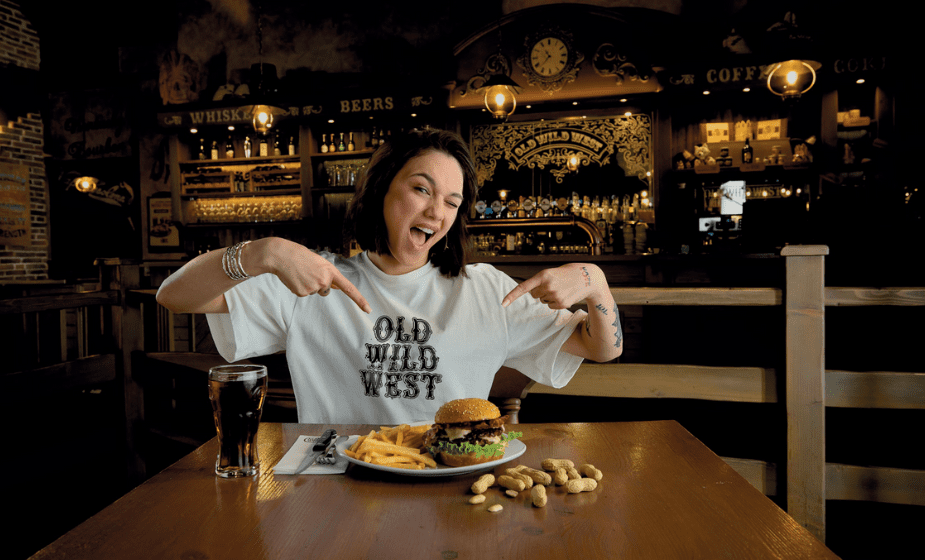
Maria Esposito is the spokesperson for Old Wild West’s new menu dedicated to Mare Fuori

Maria Esposito è la testimonial del nuovo menù di Old Wild West dedicato a Mare Fuori

For the occasion, Maria Esposito, the young interpreter of the character of Rosa Ricci, will also be the star of a new Old Wild West commercial

March 11, 2025 – Sea Out, the Rai series that has won millions of viewers across Italy, becomes the inspiration for a new culinary proposal branded Old Wild West: Maria Esposito, the interpreter of the famous character of Rosa Ricci in the cult series, will be the testimonial of the new menu signed Old Wild West dedicated to the fans of Mare Fuori.

Beginning Wednesday March 12, in fact – the day the first six episodes of the series will be made available on RaiPlay – all Old Wild West restaurants in Italy will present O’ Menù, the unprecedented gastronomic proposal designed for those who wish to experience the atmosphere of the series also at the table, starring an exclusive sandwich, created especially for the occasion.

Witness the new menu signed Old Wild West – family burgers & steakhouse chain Cigierre, a leading company in the development and management of thematic restaurants and casual dining – and the dedicated promotional campaign will be the young Maria Esposito, a beloved face of the series as the character of Rosa Ricci and an emerging talent on the Italian film scene, who will also star in a dedicated commercial airing on Rai Play and major digital platforms also starting March 12.

We are excited about this collaboration because Mare Fuori is much more than a series: it is a phenomenon capable of moving and deeply engaging the public.” – said Stefano Taboga, Chief Marketing and Sales Officer of Cigierre. “C n the special menu designed for the series, we want to bring a taste of that intensity to our restaurants, blending taste and feelings and turning the dining experience into a journey inside the stories that thrill audiences.. For this, we could not have imagined a better testimonial than Maria Esposito, whom we are proud to have by our side and whom we thank for her enthusiasm and collaboration.”

Just like Maria Esposito, in fact, who embodies strength and passion, the new menu è an encounter between character and taste, capable of leaving its mark: an opportunity to experience Mare Fuori in a different way, savoring genuine emotions and unique tastes.

Acis at wine general states, Mecarozzi: “Cardboard packaging will grow as a branding vehicle and an integral part of the buying experience. Excellence in sustainability as well.”

Stati Generali del Vino 2025 ACIS

They were held today, Monday, Feb. 17, at the Protomoteca Hall of the Capitol in Rome, the States General of Wine, an opportunity to focus on the regulatory framework and EU policies concerning this sector.

The wine sector European represents one of the pillars of the Common Agricultural Policy (CAP) and one of the excellences of the European Union. With annual production exceeding 160 million hectoliters, the EU remains the world leader in the industry, contributing to 45 percent of global vineyard area, 63 percent of global wine production and 48 percent of global wine consumption. Viticulture involves more than 3.2 million hectares and about 2.5 million wineries, generating more than 3 million direct jobs, plus numerous indirect jobs along the supply chain. Italy, France and Spain, the EU’s main producers, continue to account for nearly half of global production. Just l’Italy boasts a production of 49.7 million hectoliters in 2024, making wine one of the most recognized symbols of “Made in Italy.”

Andrea Mecarozzi, President of the Italian Boxmakers Association – who spoke as a speaker within the panel “EU Policies and Regulatory Framework for the Wine Sector” – emphasized the central role of cardboard packaging in the wine distribution chain.

Cardboard packaging is a key hub in the wine supply chain and in the transportation of this Italian excellence. There is an enormous amount of work that goes through the entire paper and cardboard supply chain to get to the point of producing low-cost, high-quality packaging that is adequate to best protect wines of all levels on their journey from the winery to tables around the world. The category of box converters that I represent here, thanks to its strong territorial roots, continues to develop specific skills related to different sectors, such as wine, constantly trying to bring innovative and increasingly sustainable cardboard packaging solutions, calibrated to the specific needs of the sector.”

Mecarozzi then outlined the main trends affecting corrugated packaging and their unique characteristics in terms of sustainability.

“The corrugated packaging supply chain has already achieved recyclability standards that anticipate future European regulations, demonstrating a strong commitment to a circular economy and low environmental impact. In Italy, more than 80 percent of the raw materials used in cardboard production come from recycled paper, and the recycling rate of cellulosic packaging is more than 90 percent. But we will not stop there: more can be done in terms of packaging design to reduce material waste, improve accessibility, and further encourage separate collection. As an association we are committed to guiding our box manufacturers in these new directions, anticipating future new European regulations, including the European Packaging Regulation that will come into force in 2026.”

But not only that. Today the cardboard box has also become a communication and branding tool: “Other important challenges, which also greatly affect the wine sector, continues Mecarozzi – are related to packaging innovation and creativity. The market is increasingly asking us to transform the classic brown cardboard box into something special that can best complement an exciting shopping experience, such as the wine experience. The potential of corrugated packaging as a brand positioning tool is becoming increasingly clear to the market, and this is breathing new life into our industry.”

In conclusion, the States General of Wine provided an important opportunity for discussion among institutions, operators and stakeholders in the supply chain. And it was on this occasion that the Italian Boxmakers Association reiterated the need for a greater synergy between the packaging industry and institutions. “We are working with the relevant ministries for the support of our supply chain. For our part, there is the utmost willingness in making people understand what its peculiarities and potential are, so that institutions can legislate the sector in the best possible way and at the same time not have it at a disadvantage with competing sectors. The supply chains of the future must cooperate together with the institutions so that sustainable solutions are not the most costly, on the contrary. It is certainly mutually beneficial to ” – concluded Mecarozzi.

The importance of diversity and inclusion in Spencer & Lewis

spencer & lewis

The importance of diversity andinclusion in Spencer & Lewis.

In today’s business environment, reflecting on the impact of decisions on employee well-being and team success is critical. One question we constantly ask ourselves is, “Are we really creating an environment where every voice is valued and heard?”

In an age when words like “diversity” and “inclusion” are often used as slogans, our commitment goes far beyond simply pandering to trends. For us, diversity is not a box to check, but the beating heart of a vibrant and dynamic corporate culture. It is not just about recognizing differences, but making them really count.

The variety of perspectives resulting from the diversity of gender, ethnicity, cultural background and life experiences not only enriches our work environment, but also stimulates innovation and creativity to unprecedented levels. Every day, we see how a diverse team can overcome “group think,” challenging the status quo and paving the way for innovative and unexpected solutions.

Creating an environment that welcomes and celebrates these differences not only allows us to attract top talent, but also to build a workplace where people feel they are part of a common project. Their motivation to contribute and excel increases significantly.

Our vision goes beyond mere acceptance of differences. We are actively committed to building safe spaces where open and constructive debate is not only welcome, but essential to our collective success. We firmly believe that it is in the meeting of diverse perspectives that the brightest and most innovative ideas are born.

We want to foster an inclusive corporate culture that values each and every voice. We know that diversity is an invaluable resource, and our mission is to ensure that every employee feels heard, valued, and free to express their potential.

In conclusion, diversity and inclusion are not only corporate valuesfor us, but fundamental pillars of our growth and innovation strategy. Through our ongoing efforts, we aspire to build a work environment that not only welcomes but celebrates every individual, because only then can we achieve collective success and meet the challenges of the future with creativity and resilience.

Work-life balance in Spencer & Lewis

Vita-lavoro Spencer & Lewis

The balance between professional and personal life is an increasingly crucial issue in Spencer & Lewis.

Being able to truly unplug, take breaks, and devote time to your life outside of the work environment is necessary, and it is a concept that at Spencer & Lewis we try to remember all the time, almost as if it were a mantra. Not only does this perspective reflect the company’s focus on the well-being of its employees, but it also provides an opportunity for reflection for anyone facing the challenges of work-lifebalance.

Modern society often falls victim to a culture that promotes constantly being “connected,” with e-mail and notifications reaching us even outside of work hours. However, at Spencer & Lewis we are committed to fostering a work environment that recognizes the importance of disconnecting, finding moments of rest, and making time for personal passions and relationships.

Adopting this approach is not only ethical, but also has tangible implications for employees’ job performance and mental health. Several studies show that a good work-life balance not only improves productivity, but also reduces stress and improves overall job satisfaction, and this has been found by our people as well.

It would be nice if everyone reading could reflect on this issue and take the time to disconnect, regain balance and appreciate the moments outside the office.

A message that resonates loudly in an increasingly fast-paced and interconnected world, and one that has been with us forever.

To find out more, visit the section on LinkedIn News: To disconnect in earnest.